



Look Younger.
Feel Sharper.
Live Freer.
15k
Imagine loving the mirror again. At Dr. Madhu’s, we understand hair loss and use advanced, proven techniques to permanently restore your natural hair.

Proud to be India's FIRST Hair Transplant Surgeon certified by the prestigious American Board of Hair Restoration Surgery.

Bringing over 25 years of proven, trusted expertise in surgical hair restoration, delivering safe and natural-looking results.

An esteemed member of the International Society of Hair Restoration Surgery (ISHRS), committed to the highest global standards.

An ISO 9001 Certified hair restoration centre committed to maintaining the highest standards of quality, patient safety, clinical excellence, and personalized care.
About Us
At Dr. Madhu’s, we make hair restoration precise, effective, and completely transparent. Our focus is on advanced surgical techniques, proven technology, and real results you can actually see. We are the best Hair Transplant Clinic in Hyderabad
From proven early-stage medical therapies to the most advanced hair restoration surgeries, we offer comprehensive solutions designed to restore your hairline with lasting, natural-looking results. Whether you’re experiencing the first signs of hair thinning or seeking a permanent solution to advanced hair loss, our personalized treatment plans are tailored to your unique needs and goals.
Transformative Treatments
Expert care across specialized medical disciplines, delivering advanced treatments with precision, compassion, and exceptional outcomes.
Hair Transplantation
Plastic Surgery
Dermatology & Skin care
Advanced Dental Care
Led by India’s first ABHRS-certified surgeon, we bring over 25 years of pioneering expertise to your hair restoration.
Dr. Madhu introduced advanced hair transplantation to India. For over 25 years, we have been transforming lives with advanced hair restoration solutions. Led by India’s first ABHRS-certified surgeon, our clinic combines world-class expertise, cutting-edge technology, and personalized treatment plans to deliver natural-looking, long-lasting results with the highest standards of patient care. We are best hair transplant clinic in Hyderabad.
25+ Years of Expertise
Personalized Treatment Plans
Advanced Technology
Natural-Looking Results
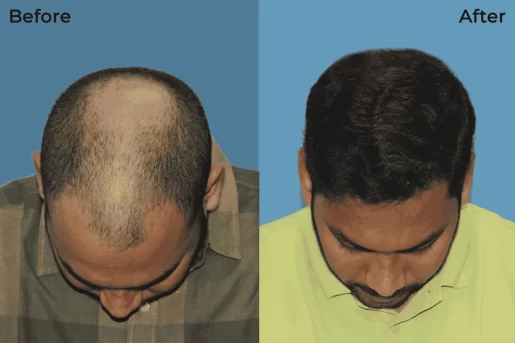
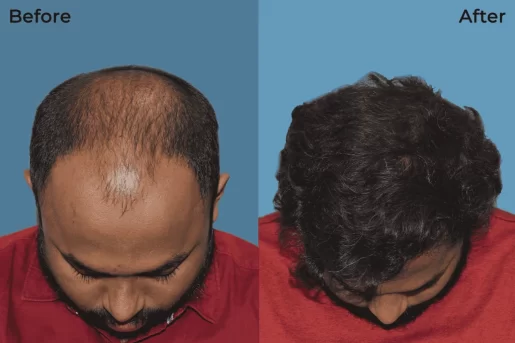
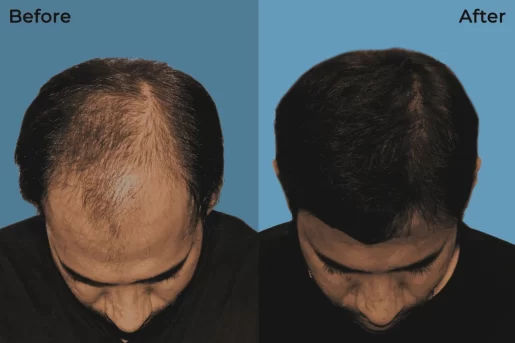
Hair Transplant Results Hyderabad
What kind of result can I realistically expect?
At HairHospi.in, Dr. Ram focuses on helping patients understand their hair loss, assess donor hair availability, and choose an appropriate treatment plan. The goal is not simply to add grafts. A well-planned transplant should aim for a natural-looking hairline, appropriate density, good graft placement, and results that suit the patient’s facial features and existing hair.
When evaluating Hair Transplant results Hyderabad, patients should look beyond a single before-and-after photograph. Results can vary because of age, hair-loss pattern, donor density, graft characteristics, medical factors, surgical technique, and post-operative care.
Understanding Hair Transplant Results
Hair transplantation is a surgical procedure that redistributes healthy hair follicles from a donor area to areas affected by hair loss. The transplanted follicles can continue to grow hair because they are generally more resistant to the effects of androgenetic hair loss.
However, a transplant does not stop every possible cause of future hair loss. Existing non-transplanted hair may continue to thin. For this reason, proper diagnosis and long-term planning are important before surgery.
Good Hair Transplant results Hyderabad should therefore be judged on more than immediate appearance. A useful assessment includes the naturalness of the hairline, graft survival, direction and angle of growth, coverage, density, donor-area appearance, and the patient’s overall satisfaction after adequate healing time.
What Influences Hair Transplant Results?
Several factors can affect the final outcome:
- The patient’s age and pattern of hair loss
- The stability and cause of hair loss
- Donor-area density and follicle quality
- Number and type of grafts required
- Hair characteristics such as thickness, texture, and curl
- Hairline design
- Surgical planning and graft handling
- Post-operative care
- Individual healing and growth response
It is important to understand that hair transplant results develop gradually. A patient should not judge the final outcome during the first few weeks.
Hair Transplant Before and After: What Should You Look For?
Before-and-after images can be useful when choosing a clinic, but they need to be interpreted carefully. Look for photographs taken under similar lighting, camera angles, hairstyles, and hair lengths.
Ideally, patients should review cases that resemble their own hair-loss pattern. A patient with mild frontal thinning may have very different expectations from someone with extensive crown and frontal loss.
A credible consultation should explain what is realistically achievable rather than promising a particular density or guaranteed outcome.
Causes of Beard and Mustache Hair Loss
Although scalp hair transplantation is common, some patients seek treatment for sparse beard or mustache growth. Causes can include genetics, naturally low facial-hair density, hormonal influences, previous injury or scarring, certain skin conditions, and other medical factors.
Not every case of facial-hair loss requires transplantation. A proper evaluation can help determine whether a transplant is appropriate and whether another medical issue needs attention first.
Who Is a Suitable Candidate?
A consultation is important before deciding on surgery. Suitable candidates generally have a stable donor supply and areas where additional hair can improve coverage.
The doctor may assess:
- The cause and pattern of hair loss.
- The condition and density of the donor area.
- The quality and characteristics of existing hair.
- Expectations regarding density and appearance.
- General factors that could affect surgery or healing.
You may need further medical assessment if the cause of hair loss is unclear, sudden, patchy, or associated with other symptoms.
Step-by-Step FUE Hair Transplant Procedure
1. Consultation and Hair-Loss Assessment
The process begins with an assessment of your hair-loss pattern and donor area. Hairline design, expected coverage, graft requirements, and realistic outcomes should be discussed before treatment.
2. Treatment Planning
The treatment plan is individualized. The number of grafts depends on the area being treated, donor availability, hair characteristics, and the desired level of coverage.
3. Preparing the Donor Area
For FUE, individual follicular units are extracted from the donor area using appropriate instruments. The process requires careful handling because graft quality can influence the eventual result.
4. Graft Preparation
The extracted grafts are prepared for implantation. Careful handling and appropriate storage help protect the follicles during the procedure.
5. Recipient-Site Preparation
Small recipient sites are created in the areas requiring additional coverage. The direction, angle, spacing, and placement of grafts are important for creating a natural appearance.
6. Graft Implantation
The prepared follicular units are placed into the recipient sites. The pattern should account for existing hair and the patient’s anticipated future hair-loss pattern.
7. Post-Procedure Instructions
After treatment, the patient receives instructions regarding washing, sleeping position, physical activity, medications if prescribed, and protecting the treated area.
FUE vs FUT
FUE and FUT are different hair-transplant techniques. FUE involves removing individual follicular units from the donor area. FUT involves removing a strip of donor skin and dissecting it into follicular units.
The appropriate technique depends on factors such as donor characteristics, previous procedures, hair-loss pattern, and the treatment plan. A consultation can help determine which approach is appropriate for an individual patient.
Recovery Timeline
Recovery varies from person to person. Mild swelling, redness, tenderness, or crusting may occur after transplantation.
During the early period, the transplanted area may look different from the eventual result. Some transplanted hairs may shed after the procedure. This is commonly called shock loss or shedding and does not necessarily mean that the follicles have been permanently lost.
New growth usually develops gradually. Meaningful changes may become more noticeable over several months, while the final appearance can take longer to assess.
A General Timeline
First few days: Follow the clinic’s wound-care and washing instructions carefully.
First few weeks: Temporary shedding may occur. Avoid unnecessary rubbing, scratching, or trauma to the recipient area.
Around 3–4 months: Early new growth may begin to become visible in some patients.
Around 6 months: Growth and coverage can become more noticeable.
Around 9–12 months: Many patients can better assess the developing result, although the timing varies.
Your doctor should provide individualized guidance rather than treating this timeline as a guarantee.
Aftercare for Better Healing
Following aftercare instructions is an important part of the recovery process.
- Wash the scalp only as instructed.
- Avoid scratching or picking at crusts.
- Follow prescribed medicines exactly as directed.
- Avoid strenuous activity for the period recommended by your doctor.
- Protect the scalp from unnecessary sun exposure during early healing.
- Attend follow-up appointments.
- Contact the clinic if you experience unusual symptoms or concerns.
Aftercare cannot guarantee graft survival, but careful compliance supports appropriate healing.
Risks and Possible Side Effects
Hair transplantation is a surgical procedure, so it has potential risks. These may include swelling, discomfort, bleeding, infection, scarring, temporary numbness, folliculitis, uneven growth, poor graft growth, or an unnatural appearance.
The donor area may also show changes if too many grafts are removed or if extraction is poorly distributed. Future hair loss can affect the appearance of the transplanted area and surrounding native hair.
A responsible consultation should discuss benefits, limitations, alternatives, and potential complications before treatment.
Cost Factors
The cost of hair transplantation varies from patient to patient. It can depend on the number of grafts required, treatment area, technique, clinical requirements, surgical complexity, and other services included in the treatment plan.
There is no single price that is medically appropriate for every patient. A consultation is the best way to understand your individual treatment requirements and the associated cost.
Hair Transplant Results Hyderabad: Secondary Keyword Insights
Hair Transplant Results Hyderabad
Hair transplant results Hyderabad depend on factors such as donor density, hair characteristics, graft placement, healing, and future hair loss. When reviewing Hair transplant results Hyderabad, patients should compare cases with similar hair-loss patterns rather than expecting identical outcomes. The best approach to Hair transplant results Hyderabad is an individualized plan based on realistic medical assessment.
Hair Transplant Before After Photos Hyderabad
Hair transplant before after photos Hyderabad can help patients understand how results may develop over time. When reviewing Hair transplant before after photos Hyderabad, look for consistent lighting, angles, hair length, and follow-up periods. Reliable Hair transplant before after photos Hyderabad should be viewed as examples, not guarantees of the result you will personally achieve.
FUE Hair Transplant Results Hyderabad
FUE hair transplant results Hyderabad can vary according to donor supply, graft quality, extraction technique, implantation, and individual healing. Patients considering FUE hair transplant results Hyderabad should understand that transplanted hair develops gradually rather than immediately. Discussing expected FUE hair transplant results Hyderabad with a qualified doctor can help establish realistic expectations.
FUT Hair Transplant Results Hyderabad
FUT hair transplant results Hyderabad depend on factors including donor characteristics, surgical planning, graft handling, and the patient’s healing response. When discussing FUT hair transplant results Hyderabad, it is important to consider the potential donor-area scar associated with the strip technique. Individual assessment is essential when evaluating expected FUT hair transplant results Hyderabad.
Natural Looking Hair Transplant Hyderabad
A Natural looking hair transplant Hyderabad treatment requires careful attention to hairline design, graft direction, angles, spacing, and existing hair. Patients seeking a Natural looking hair transplant Hyderabad should discuss how the planned hairline will suit their facial proportions and future hair-loss pattern. The aim of a Natural looking hair transplant Hyderabad procedure should be appropriate, balanced coverage rather than an artificially dense appearance.
Hair Restoration Results Hyderabad
Hair restoration results Hyderabad develop gradually as transplanted follicles enter their growth cycle. When assessing Hair restoration results Hyderabad, patients should consider both the treated area and the condition of their remaining native hair. Realistic expectations are an important part of achieving satisfaction with Hair restoration results Hyderabad.
Hair Transplant Patient Results Hyderabad
Hair transplant patient results Hyderabad can differ significantly between individuals because every patient has different donor characteristics and hair-loss patterns. Reviewing Hair transplant patient results Hyderabad may help explain the range of outcomes possible after treatment. However, Hair transplant patient results Hyderabad should never be interpreted as a promise that every patient will experience the same result.
Successful Hair Transplant Results Hyderabad
Successful hair transplant results Hyderabad should be evaluated using objective factors such as naturalness, appropriate coverage, graft growth, donor management, and patient satisfaction. Patients researching Successful hair transplant results Hyderabad should also consider whether photographs show an adequate follow-up period. Ultimately, Successful hair transplant results Hyderabad means an outcome that is medically appropriate and aligned with realistic expectations.
Hair Growth After Transplant Hyderabad
Hair growth after transplant Hyderabad is gradual, and temporary shedding can occur during the early stages. Patients researching Hair growth after transplant Hyderabad should understand that visible improvement may take several months. The timeline for Hair growth after transplant Hyderabad differs between individuals, so follow-up with the treating doctor is important.
Hair Transplant Gallery Hyderabad
A Hair transplant gallery Hyderabad can provide visual examples of different hair-loss patterns and treatment outcomes. When reviewing a Hair transplant gallery Hyderabad, patients should look for consistent photography and information about follow-up periods. A Hair transplant gallery Hyderabad should educate patients about possibilities rather than create unrealistic expectations.
Real Hair Transplant Cases Hyderabad
Real hair transplant cases Hyderabad can help patients understand how different degrees of hair loss may respond to treatment. Reviewing Real hair transplant cases Hyderabad is more useful when the photographs represent comparable starting conditions and adequate follow-up. Patients should remember that Real hair transplant cases Hyderabad demonstrate individual outcomes and cannot guarantee the same result for another person.
Hair Transplant Transformation Hyderabad
A Hair transplant transformation Hyderabad may involve gradual changes in hairline shape, coverage, and overall appearance. Patients considering a Hair transplant transformation Hyderabad should understand that the process takes months and may require ongoing management of existing hair. A realistic Hair transplant transformation Hyderabad focuses on natural improvement rather than an instant change.
Best Hair Transplant Results Hyderabad
The Best hair transplant results Hyderabad are not necessarily the results with the highest number of grafts. Patients looking for the Best hair transplant results Hyderabad should consider naturalness, donor preservation, appropriate planning, and long-term sustainability. Ultimately, the Best hair transplant results Hyderabad are individualized and depend on what can safely be achieved for each patient.
Hair Transplant Reviews Hyderabad
Hair transplant reviews Hyderabad may offer useful insight into a clinic’s patient experience, communication, and follow-up process. However, Hair transplant reviews Hyderabad should be considered alongside medical consultation, clinical information, and documented results. When reading Hair transplant reviews Hyderabad, remember that individual experiences can differ.
Hair Transplant Testimonials Hyderabad
Hair transplant testimonials Hyderabad can describe how patients felt about their treatment journey and experience. While Hair transplant testimonials Hyderabad may be helpful, testimonials should not replace professional medical evaluation or be treated as evidence of guaranteed outcomes. Patients researching Hair transplant testimonials Hyderabad should consider the full treatment process, recovery period, and individual circumstances.
Why Choose Dr. Ram and HairHospi.in?
Choosing a hair-transplant clinic is an important decision. At HairHospi.in, the focus should be on an individualized assessment rather than applying the same treatment plan to every patient.
Dr. Ram can assess your pattern of hair loss, donor supply, treatment goals, and suitability before discussing possible options. The consultation should also cover limitations, expected growth, recovery, potential risks, and long-term considerations.
A good treatment decision is based on medical assessment, clear communication, and realistic expectations.
What Makes a Hair Transplant Result Look Natural?
Naturalness depends on several details working together. The hairline should generally transition gradually rather than appearing like a straight row of implanted hairs.
Graft direction should follow the natural direction of surrounding hair. Density should also be planned carefully because using too many grafts in one area can place unnecessary pressure on the donor supply.
Hair characteristics matter too. Thick, curly hair may provide visual coverage differently from fine, straight hair. These factors should be considered during treatment planning.
Maintaining Your Hair After a Transplant
A transplant addresses existing areas of hair loss, but it does not necessarily prevent future thinning of non-transplanted hair. Your doctor may discuss medical treatments or other approaches where appropriate.
Long-term monitoring can help identify changes in native hair and allow treatment to be adjusted when necessary.