


Dr.Madhu's Advanced Hair Transplant Centre
India's Leading Hair Transplant Clinic

Look Younger.
Feel Sharper.
Live Freer.

Experience world-class hair restoration with advanced techniques, personalized care, and natural-looking results from India’s first ABHRS-certified surgeon.

Imagine loving the mirror again. At Dr. Madhu’s, we understand hair loss and use advanced, proven techniques to permanently restore your natural hair.

Proud to be India's FIRST Hair Transplant Surgeon certified by the prestigious American Board of Hair Restoration Surgery.

Bringing over 25 years of proven, trusted expertise in surgical hair restoration, delivering safe and natural-looking results.
An esteemed member of the International Society of Hair Restoration Surgery (ISHRS), committed to the highest global standards.

An ISO 9001 Certified hair restoration centre committed to maintaining the highest standards of quality, patient safety, clinical excellence, and personalized care.
About Us

At Dr. Madhu’s, we make hair restoration precise, effective, and completely transparent. Our focus is on advanced surgical techniques, proven technology, and real results you can actually see. We are the best Hair Transplant Clinic in Hyderabad

From proven early-stage medical therapies to the most advanced hair restoration surgeries, we offer comprehensive solutions designed to restore your hairline with lasting, natural-looking results. Whether you’re experiencing the first signs of hair thinning or seeking a permanent solution to advanced hair loss, our personalized treatment plans are tailored to your unique needs and goals.

Transformative Treatments

Expert care across specialized medical disciplines, delivering advanced treatments with precision, compassion, and exceptional outcomes.

Hair Transplantation

Regain confidence with advanced hair transplant solutions, delivering natural-looking, permanent results through personalized treatments and minimally invasive surgical techniques.

Plastic Surgery

Enhance your appearance with advanced plastic surgery, offering personalized procedures, expert care, natural-looking results, and exceptional safety standards throughout.

Dermatology & Skin care

Achieve healthy skin with expert dermatology treatments for acne, pigmentation, hair loss, laser procedures, and advanced skin rejuvenation solutions.

Advanced Dental Care

Restore your smile with comprehensive dental care, including cosmetic dentistry, dental implants, restorative treatments, and preventive oral health solutions for lasting confident smiles.
Why Choose us

Led by India’s first ABHRS-certified surgeon, we bring over 25 years of pioneering expertise to your hair restoration.

Dr. Madhu introduced advanced hair transplantation to India. For over 25 years, we have been transforming lives with advanced hair restoration solutions. Led by India’s first ABHRS-certified surgeon, our clinic combines world-class expertise, cutting-edge technology, and personalized treatment plans to deliver natural-looking, long-lasting results with the highest standards of patient care. We are best hair transplant clinic in Hyderabad.

25+ Years of Expertise
Decades of experience in advanced hair restoration and transplant procedures.
Personalized Treatment Plans
Customized solutions designed around your hair type, goals, and lifestyle.
Advanced Technology
State-of-the-art equipment and precision techniques for optimal graft survival.
Natural-Looking Results
Meticulously crafted hairlines that blend seamlessly for lasting confidence.

Best Hair Transplant Clinic in Hyderabad

Hair loss can affect much more than your appearance. It can influence confidence, personal style, and the way you feel in social and professional situations. If you are looking for a hair transplant clinic in Hyderabad, choosing the right doctor and treatment approach is an important medical decision.

At Dr. Ram Hair Hospi, hair restoration is approached with an emphasis on proper assessment, realistic expectations, donor-hair management, and individualized treatment planning. The aim is not simply to add grafts, but to develop a hair restoration plan that considers your existing hair, donor area, hairline, degree of hair loss, and long-term pattern of thinning.

For people searching for the best hair transplant clinic in Hyderabad, it is important to look beyond advertisements and compare the medical team, consultation process, surgical approach, aftercare, transparency, and suitability of the recommended procedure.

Dr. Ram Hair Hospi provides hair restoration options that may include FUE hair transplant, FUT hair transplant, beard transplant, eyebrow transplant, and PRP therapy, depending on the patient’s condition and clinical assessment.

Important: Hair transplantation is a surgical procedure. Not every person with hair loss is a suitable candidate, and results vary from person to person. A consultation and appropriate diagnosis are necessary before deciding on treatment.

Why Choose Dr. Ram Hair Hospi for Hair Restoration in Hyderabad?

Selecting a hair restoration clinic should be based on more than a claim of being the “best.” A responsible clinic should explain what is medically appropriate for your particular type of hair loss and what outcomes can reasonably be expected.

At Dr. Ram Hair Hospi, prospective patients can discuss their concerns, hair-loss pattern, donor area, previous treatments, and restoration goals during a consultation.

Individualized Hair Loss Assessment

Hair loss can have different causes. Pattern hair loss, temporary shedding, certain scalp conditions, nutritional issues, hormonal factors, medications, and other medical conditions may require different approaches.

A transplant is not automatically the correct treatment for every type of hair loss. For example, hair transplantation is generally considered for appropriately selected patients with permanent areas of hair loss and adequate donor hair. The International Society of Hair Restoration Surgery (ISHRS) also recommends that patients understand who will evaluate them, who will perform the surgery, and the qualifications and experience of the medical professionals involved.

Natural-Looking Hairline Planning

The hairline plays an important role in the overall appearance of a transplant. A responsible treatment plan should consider age, facial proportions, existing hair, future hair loss, and the availability of donor follicles.

Rather than designing a hairline only for the appearance of the first few years after surgery, long-term donor-hair conservation should also be considered.

Appropriate Donor-Hair Management

Hair follicles available in the donor area are limited. Removing too many grafts or distributing them poorly can compromise the donor area and potentially limit future treatment options.

FUE and FUT are donor-hair harvesting approaches. They are not simply interchangeable procedures that should be selected based on marketing terminology. The appropriate method depends on factors such as donor characteristics, hair-loss pattern, previous surgery, hairstyle preferences, and the surgeon’s assessment.

Transparent Treatment Discussions

A good consultation should cover:

  • The likely cause and pattern of hair loss
  • Whether transplantation is appropriate
  • Alternative or complementary treatments
  • FUE versus FUT considerations
  • Expected recovery
  • Potential risks and side effects
  • Donor-area limitations
  • Possibility of continued native-hair loss
  • Long-term planning
  • Follow-up requirements
  • Realistic expectations

This approach is particularly important because hair transplantation is surgery, even when performed using minimally invasive techniques.

Hair Transplant Services at Dr. Ram Hair Hospi

Different patients have different restoration requirements. Dr. Ram Hair Hospi can provide treatment options based on individual assessment.

FUE Hair Transplant in Hyderabad

Follicular Unit Excision (FUE) involves harvesting individual follicular units from the donor area using a small punch and placing the harvested grafts into recipient areas.

FUE is widely used in modern hair restoration. Unlike FUT, it does not involve removing a linear strip of scalp. However, it should not be described as completely “scarless.” Individual extraction sites can leave small scars, and the appearance can vary depending on the technique, healing, hair characteristics, and number of grafts harvested.

The ISHRS specifically cautions against claims that hair transplantation is “scarless.” Both FUE and FUT involve surgery and can produce scarring.

Potential advantages of FUE

Depending on the patient, FUE may offer:

  • Individual follicular-unit harvesting
  • No linear strip scar
  • The ability to harvest grafts individually
  • Potential suitability for certain patients who prefer shorter hairstyles
  • Flexibility in donor harvesting

However, FUE is not automatically better than FUT for every patient.

The choice should be based on medical assessment rather than the popularity of a particular technique.

Who may be considered for FUE?

Potential candidates may include appropriately diagnosed patients with sufficient donor hair and stable or manageable hair loss. A detailed consultation is necessary to determine suitability.

FUT Hair Transplant in Hyderabad

Follicular Unit Transplantation (FUT), also known as strip harvesting, involves removing a strip of hair-bearing skin from the donor area and dissecting it into individual follicular-unit grafts.

The grafts are subsequently placed into recipient areas where hair restoration is required.

FUT has been used in hair transplantation for decades. According to the NHS, FUT involves removing a strip of skin containing hair follicles, dividing it into grafts, and closing the donor area with stitches. A linear scar remains at the donor site.

When may FUT be considered?

FUT may be considered in appropriately selected patients depending on:

  • Donor-area characteristics
  • Hair density
  • Number of grafts required
  • Previous procedures
  • Long-term restoration planning
  • Patient preferences
  • Clinical judgment

The decision between FUE and FUT hair transplant should be made after evaluating your individual circumstances.

FUE vs FUT: Which Hair Transplant Technique Is Better?

There is no single procedure that is automatically the best option for every patient.

Factor

FUE

FUT

Donor harvesting

Individual follicular units

Strip of hair-bearing skin

Linear scar

No

Yes

Individual extraction sites

Yes

No

Sutures

Generally not required for extraction

Required for strip closure

Short hairstyles

May be preferable for some patients

Scar may be more visible with very short hairstyles

Suitability

Depends on donor characteristics and treatment goals

Depends on donor characteristics and treatment goals

Both methods involve surgery, and both require careful planning.

The NHS notes that hair-transplant surgery can involve swelling, scalp discomfort, scabbing, scars, bleeding, infection, reactions to anaesthesia, and the possibility that transplanted hair may not grow as expected. Continued thinning of existing hair can also occur.

Therefore, anyone comparing a hair transplant clinic in Hyderabad should ask not only which technique is offered, but why that technique is recommended for their individual case.

Beard Transplant in Hyderabad

A beard can be an important part of facial appearance. Some men experience naturally sparse beard growth, patchiness, or areas where hair growth is limited.

A beard transplant involves transferring hair follicles from a suitable donor area to selected areas of the beard.

The goal is to create a distribution that complements the patient’s facial structure and existing beard pattern.

Potential treatment areas may include:

  • Cheeks
  • Jawline
  • Chin
  • Moustache
  • Sideburn region
  • Selected scarred areas

Beard restoration requires careful attention to follicle direction and placement because facial hair grows at different angles and patterns compared with scalp hair.

A consultation is necessary to determine whether beard transplantation is suitable and how many grafts may be required.

Eyebrow Transplant in Hyderabad

Eyebrows contribute significantly to facial expression and appearance. Some people experience reduced eyebrow density due to genetics, over-plucking, trauma, scarring, or other factors.

An eyebrow transplant uses donor hair follicles to restore eyebrow density in selected areas.

Because eyebrow hairs are typically finer and grow at specific angles, precise placement is particularly important.

A treatment plan should consider:

  • Existing eyebrow shape
  • Facial proportions
  • Desired density
  • Direction of hair growth
  • Donor-hair characteristics
  • Previous trauma or scarring

The objective should be a natural appearance rather than simply maximizing the number of hairs transplanted.

PRP Therapy for Hair Loss

Platelet-rich plasma (PRP) therapy is a non-surgical treatment that involves preparing a patient’s own blood to produce a platelet-rich component and injecting it into selected areas of the scalp.

PRP has been investigated as a treatment for certain types of hair loss, particularly androgenetic alopecia. Research suggests that PRP may improve hair density in some patients, but study protocols vary and the strength of evidence is not uniform. A recent systematic review and meta-analysis reported potential benefits for hair density and reduction in hair loss while also noting differences between studies and the need for further standardized research.

PRP should therefore be presented as a treatment option rather than a guaranteed hair-growth solution.

Depending on the patient’s diagnosis, PRP may be considered as part of a broader hair-loss management plan.

Who Is a Good Candidate for Hair Transplantation?

A consultation is essential because candidacy depends on several factors.

Potential candidates may have:

  • Pattern hair loss with stable or reasonably predictable progression
  • Adequate donor hair
  • Sufficient scalp health
  • Realistic expectations
  • Areas where transplantation can improve coverage
  • A treatment plan that accounts for future hair loss

Hair transplantation may not be appropriate for people with certain types of active or unexplained hair loss.

The NHS notes that hair transplantation is generally used for permanent baldness such as hereditary pattern hair loss and is not usually appropriate for conditions such as alopecia areata.

That is why a proper diagnosis should come before deciding on surgery.

What Happens During a Hair Transplant Consultation?

A consultation should be more than simply discussing the number of grafts.

The assessment may involve reviewing:

  1. Your history of hair loss
  2. Family history
  3. Previous treatments
  4. Scalp condition
  5. Donor density
  6. Hair calibre
  7. Hairline characteristics
  8. Degree and pattern of thinning
  9. Previous transplant procedures
  10. Long-term expectations

The doctor can then discuss whether surgical transplantation, non-surgical treatment, or a combination of approaches may be appropriate.

If transplantation is recommended, the treatment plan should explain the proposed donor area, recipient area, approximate graft requirement, technique, recovery, and potential risks.

Hair Transplant Procedure: What to Expect

Hair transplantation is generally performed as an outpatient procedure and is commonly performed using local anaesthesia. The exact process varies according to the technique and individual treatment plan.

Step 1: Consultation and planning

Your hair-loss pattern, donor area, recipient area, and restoration goals are assessed.

Step 2: Hairline and recipient-area design

The planned restoration areas are marked and reviewed.

Step 3: Donor harvesting

With FUE, follicular units are individually extracted.

With FUT, a strip of donor skin is removed and divided into follicular-unit grafts.

Step 4: Graft preparation

Harvested grafts are prepared for implantation.

Step 5: Recipient-site preparation

Small recipient sites are created in the areas requiring restoration.

Step 6: Graft placement

The prepared follicular units are placed into the recipient areas.

Step 7: Post-operative instructions

Patients receive instructions regarding scalp care, medication if prescribed, activity, washing, and follow-up.

The recovery process varies between individuals.

Hair Transplant Recovery and Results

Patients should understand that hair transplantation does not produce an instant final result.

Following surgery, temporary redness, swelling, scabbing, discomfort, or shedding may occur. The transplanted follicles then go through a growth cycle before visible results develop.

The NHS states that full results may take approximately 10 to 18 months following FUT, although individual timelines vary.

Patients should follow their surgeon’s post-operative instructions carefully.

It is also important to understand that transplanted hair does not prevent unrelated or continuing loss of the patient’s existing non-transplanted hair. Long-term planning may therefore be important, especially for younger patients with progressive pattern hair loss.

Is Hair Transplant Surgery Safe?

Hair transplantation is a surgical procedure and therefore carries potential risks.

Possible complications can include:

  • Bleeding
  • Infection
  • Swelling
  • Temporary discomfort
  • Scarring
  • Changes in sensation
  • Poor graft growth
  • Unnatural appearance
  • Donor-area thinning
  • Continued hair loss
  • Need for additional treatment

The specific risks depend on the individual patient and procedure.

A responsible hair transplant clinic in Hyderabad should discuss potential benefits and limitations rather than presenting transplantation as risk-free.

The ISHRS also advises patients to ask about the qualifications and role of everyone involved in their surgery and to understand the surgical options and potential risks.

How Much Does a Hair Transplant Cost in Hyderabad?

The cost of a hair transplant cannot responsibly be stated as one fixed amount for every patient.

Treatment cost may depend on:

  • Degree of hair loss
  • Number of grafts required
  • Technique selected
  • Donor-area characteristics
  • Complexity of the procedure
  • Previous transplant history
  • Additional treatments
  • Clinical requirements

For this reason, patients searching for hair transplant costs in Hyderabad should ideally have a consultation before comparing quotations.

A lower price does not necessarily mean better value, just as a higher price does not automatically indicate better clinical care.

When comparing clinics, consider the medical assessment, surgeon involvement, treatment planning, surgical standards, follow-up, and transparency alongside cost.

Why Local Expertise Matters When Choosing a Hair Transplant Clinic in Hyderabad

Patients from Hyderabad and surrounding areas often search for a hair transplant clinic near me because convenience matters during consultation and follow-up.

Dr. Ram hairhospi.in can serve patients researching hair restoration in Hyderabad and nearby areas, subject to the clinic’s current service location.

People searching from areas such as:

  • Jubilee Hills
  • Banjara Hills
  • Madhapur
  • Hitech City
  • Gachibowli
  • Kondapur
  • Kukatpally
  • Begumpet
  • Secunderabad
  • Mehdipatnam
  • Himayatnagar
  • Somajiguda
  • Ameerpet
  • Miyapur

may consider location, accessibility, consultation availability, follow-up arrangements, and the clinic’s medical credentials when evaluating their options.

For local SEO, the clinic should publish its verified address, Google Business Profile, opening hours, phone number, directions, service areas, and genuine patient reviews consistently across the website and local listings.

Avoid creating separate pages for every Hyderabad neighbourhood unless those pages provide genuinely useful, unique information.

How to Choose the Best Hair Transplant Clinic in Hyderabad

When evaluating clinics, consider these questions:

1. Who evaluates your hair loss?

The initial assessment should be medically appropriate and should identify whether transplantation is suitable.

2. Who performs the surgery?

Ask about the doctor’s qualifications, training, experience, and role in the procedure.

3. Which technique is recommended?

Ask why FUE or FUT is appropriate for your situation.

4. How is the donor area managed?

A finite donor supply should be managed carefully.

5. What results are realistic?

No ethical clinic should guarantee a specific outcome for every patient.

6. What happens after surgery?

Ask about follow-up and post-operative care.

7. What happens if hair loss continues?

Long-term planning is important because existing non-transplanted hair may continue to thin.

8. Can you review authentic patient information?

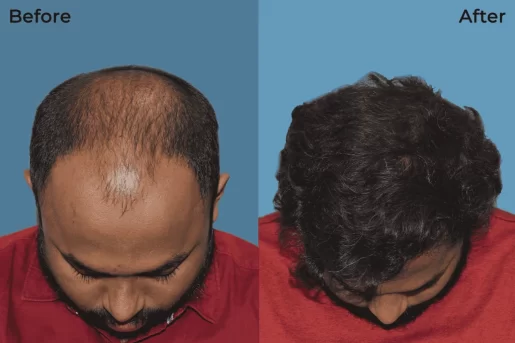
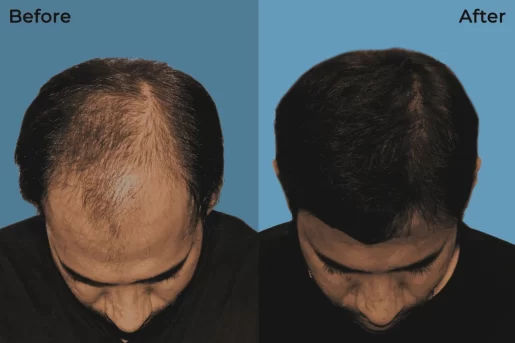
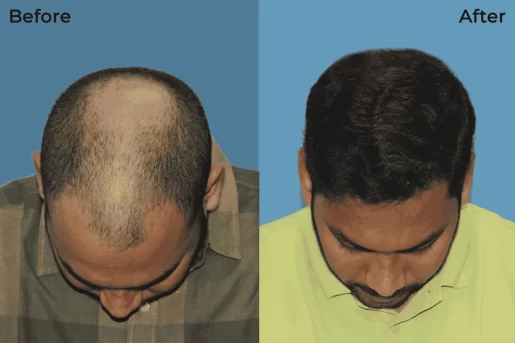
Before-and-after photographs should be genuine, appropriately presented, and not used to guarantee that another patient will experience the same result.

These questions can help patients make a more informed decision when searching for the best hair transplant clinic in Hyderabad.

Frequently Asked Questions

What is the best hair transplant technique?
There is no universally best technique. FUE and FUT are established surgical approaches, and the appropriate method depends on donor characteristics, hair-loss pattern, treatment goals, previous procedures, and clinical assessment.
Transplanted follicles are generally selected from areas considered relatively resistant to androgenetic hair loss, but outcomes vary. A transplant does not stop other non-transplanted hair from thinning.
Not necessarily. FUT and FUE have different harvesting methods, advantages, limitations, and scar patterns. The appropriate choice should be individualized.
Hair transplantation is commonly performed under local anaesthesia. Patients may experience discomfort, tightness, swelling, or tenderness during recovery. Individual experiences vary.
Hair growth is gradual. The final appearance can take many months, and the timeline varies between individuals and procedures.
Yes, some women may be candidates for hair transplantation. However, the cause and pattern of female hair loss should first be evaluated.
A beard transplant may be an option for selected patients who want to increase beard density or address certain areas of sparse growth.
Yes. Eyebrow transplantation can be used in selected patients to restore or increase eyebrow density.
PRP should not be described as a permanent cure. Research indicates potential benefits for hair density in some patients, but evidence and treatment protocols vary.
The price depends on factors such as the number of grafts, procedure type, complexity, and individual treatment plan. A consultation is the most appropriate way to determine an estimated treatment cost.
Look at the doctor’s qualifications, surgical experience, clinic standards, treatment planning, genuine reviews, aftercare, and transparency rather than relying only on price or promotional claims.
Dr. Ram Hair Hospi provides hair restoration services including FUE, FUT, beard and eyebrow transplantation, and PRP therapy, subject to individual clinical assessment. Patients should discuss their diagnosis, treatment options, risks, and expected outcomes during consultation.